
Gender Equality & Employability | British Council
21%
Women’s labour force participation in Pakistan vs 39% globally
145/146
Pakistan’s rank in Gender Gap Index 2022 (economic participation)
2.5
Women professionals working in STEM across Pakistan
15,000+
Female students enrolled at LCWU, the project’s case study institution
3
Project phases: Need Assessment, Interventions, Research Evaluation
4
Stakeholder groups engaged: students, alumni, employers, academics
The Challenge
Pakistan has one of the lowest female labour force participation rates in the world at 21%, well below the South Asian average and the global rate of 39%. Despite a 10-percentage-point improvement over 20 years, progress is stagnating. Women make up 67% of agricultural labour but only 2.5% of STEM professionals. In the Gender Gap Index 2022, Pakistan ranks 145 out of 146 countries on economic participation and opportunity. The barriers are structural: inadequate industry-academia linkages, gender-hostile workplace norms, limited STEM role models, and curricula misaligned with industry needs.
84%
Male LFPR vs 26% female (age 15–64, national)
67%
Of women in labour force work in agriculture
88%
Of female professionals work as education professionals (school teachers)
13+
Women-only universities in Pakistan to address cultural barriers
1922
Year LCWU was established, one of Pakistan’s oldest women-only institutions
Objective
Address the gender gap in employment by conducting a comprehensive need assessment, strengthening industry-academia collaborations, identifying barriers to female employment in CS, and advocating for gender equality through evidence-based interventions at LCWU.
Case Study Focus
The project is constructed around the Department of Computer Science at LCWU, Lahore, a women-only institution with 15,000+ enrolled students. CS was selected as a high-potential STEM pathway with significant industry demand but low female representation.
Funding
Funded by the British Council under its Pakistan grant portfolio (2023–2024), in partnership with HEC Pakistan. The project sits within the broader UK–Pakistan Higher Education collaboration framework linking Middlesex University and LCWU.
SDGs Alignment
Impact at a Glance
Context Data
Key Interventions
Industrial Advisory Board
Formed within the CS Department at LCWU, bringing industry representatives as advisors on curriculum, research priorities, and emerging technology trends.
OBE Curriculum Revision
Curriculum revised to Outcome-Based Education with lab manuals. Faculty trained on OBE in collaboration with DFDI. Industrial experts included in Final Year Project technical support teams.
MOUs with Industry
MoUs signed with Knowledge Streams and SFRI. In process: Mindstorm Studios and Arbisoft. Providing internships, job placements, FYP support, and joint research opportunities.
Industry Visits & Exposures
Organised visits to software houses for students to observe real work environments, discover latest technologies, and network with professionals for future opportunities.
Guest Lectures
Industry experts invited to deliver sessions on software methodologies, project management, and emerging technologies, providing student perspectives beyond academic curriculum.
Students Achievement
Students reached global stages: Huawei ICT Competition 2022–23 Global Final in China; Mindstorm Studios Rookie Game Jam winner. Showcasing of FYPs and research theses.
Project Activities
1
Phase I
NEED ASSESSMENT
Comprehensive needs, demands, abilities, and skills identification directly from female graduates and employers. Mixed-methods data collection across four themes: general university perceptions, job industry expectations, gender-specific workplace conditions, and university preparedness. Data collected via one-on-one interviews (physical and online), surveys (Google Forms), and focus group discussions.
Participants: Undergraduate students (Semester 6 & 8), alumni (Alumni Week interviews), employers and employees from industry (FGDs and interviews). Sessions ranged from 1 to 2.5 hours.
2
Phase II
CONCEPTUAL FRAMEWORK & INTERVENTIONS
Interventions designed and implemented to bridge the existing gap and bring sustainability to the academia-to-industry transition. Aligned to UN Sustainable Development Goals (SDG 4, 5, 1, 2). Six major interventions deployed across curriculum, industry linkage, and student exposure.
3
Phase III
RESEARCH EVALUATION
Post-intervention analysis condcuted. Major milestones identified through need analysis achieved. Findings were shared with British Council as a formal report and submitted for possible research publication. Engagement of industry has opened a platform for discussing workplace environment improvements and gender-specific reforms.

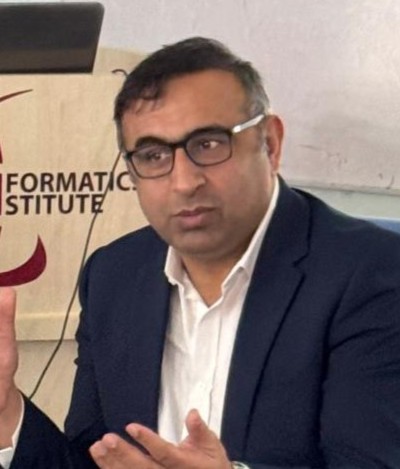

Consortium Partners
Institutional Partners & Collaborators