

Pak-UK Research Partnership – British Council ICRG
<3%
Forest Cover
Pakistan’s forest cover vs India’s 20% and Bhutan’s 70%
5
Institutions
BUITEMS, NED, LCWU, University of Glassgow, Middlesex University
24+
Researchers
PIs, Co-PIs, PDRA, PhD Scholars, & Research Assistants
2 – 4%
Provincial GDP
Juniper and pine nut economic share in Balochistan
3
Forest Sites
Ziarat & Sherani (Balochistan) + pilot extension sites
Live
Monitoring
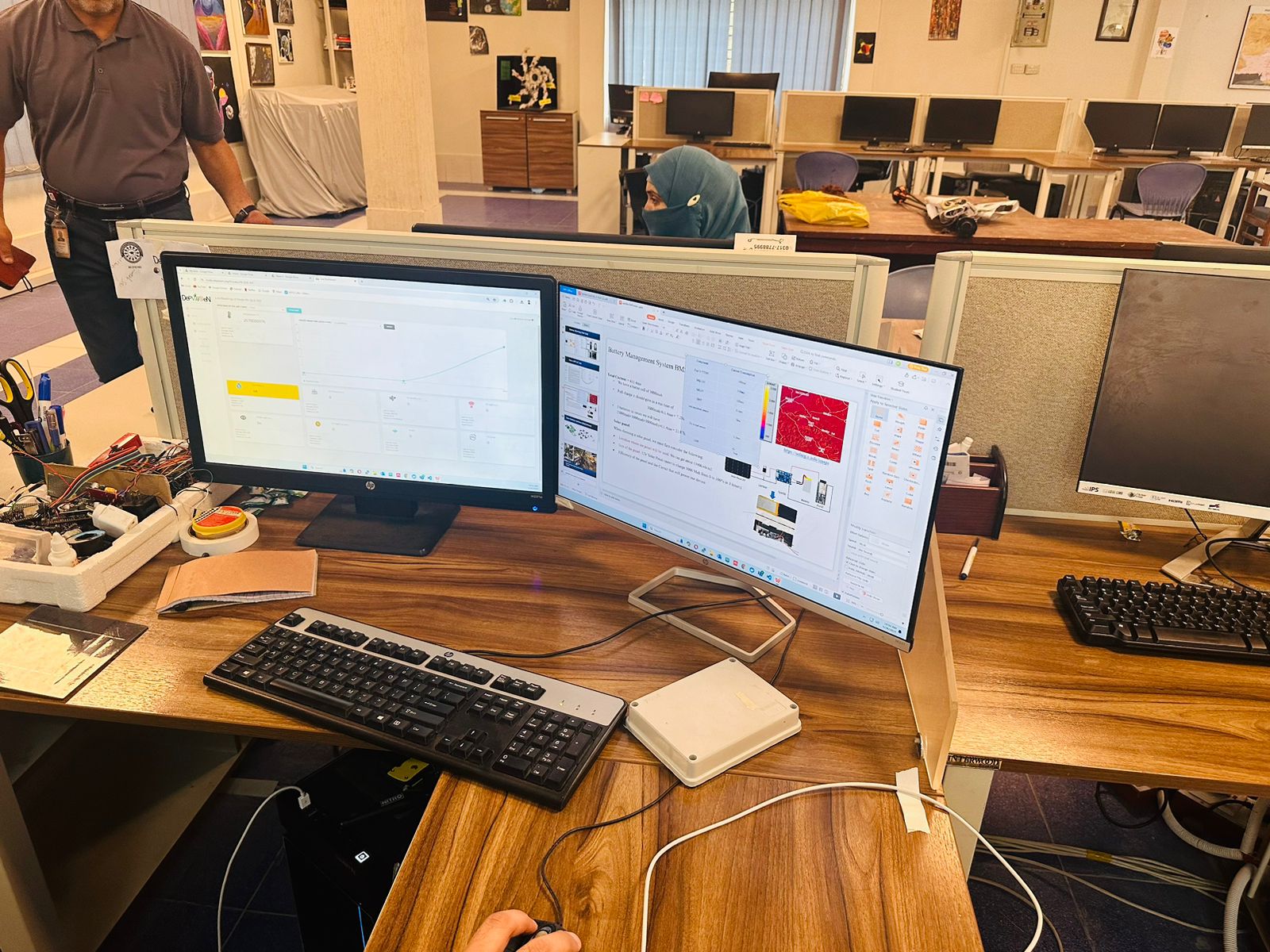
Live sensor dashboard
The Challenge
Pakistan has one of the fastest deforestation rates globally and one of the lowest forest covers in Asia. Deforestation releases billions of tonnes of CO₂ annually, drives biodiversity extinction, causes soil erosion, flooding, and droughts, and inflicts long-term economic loss from depleted natural resources. Balochistan’s Juniper forests, some of the oldest living organisms on Earth, and Pine Nut forests (contributing 2–4% of provincial GDP) are officially under threat from illegal logging, uncontrolled grazing, and wildfire. Government initiatives like the Billion Tree Tsunami and Clean Green Pakistan required a technological backbone for on-ground enforcement and monitoring.
Objective
Design and deploy a wireless sensor network (WSN)-based solution for continuous, autonomous monitoring of Pakistan’s most threatened forests, providing real-time alerts for illegal human activity, fire incidents, and tree health degradation.
Approach
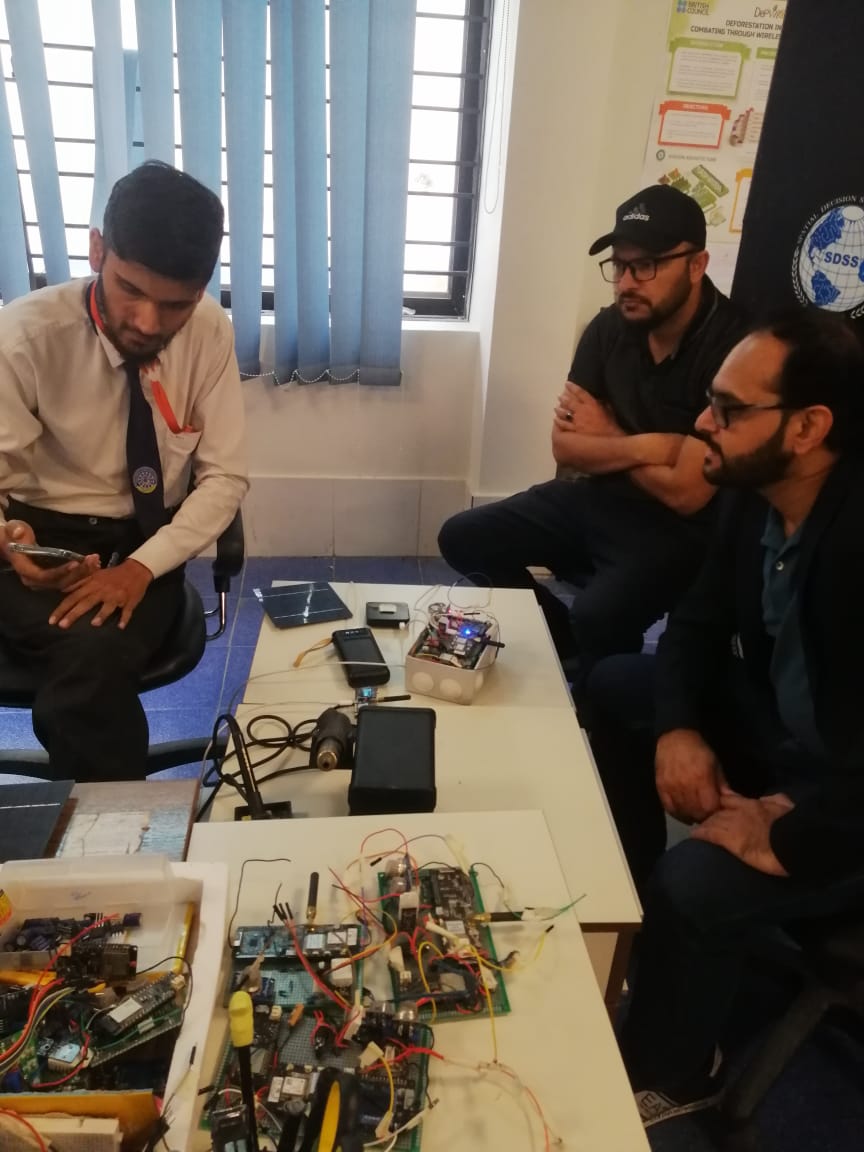
- Low-cost solar-powered sensor nodes deployed at forest sites
- Multi-parameter sensing: temperature, humidity, air quality, motion, acoustic
- LoRa/LoRaWAN long-range wireless communication
- Real-time cloud dashboard with alert thresholds
- Satellite-assisted vegetation monitoring (ArcGIS/SUPARCO)
- Deep learning for leaf disease detection & tree health
Funding and Framework
Funded under the Pak-UK Innovative & Collaborative Research Grant (ICRG) call, under the Climate Change theme, jointly by the British Council and Higher Education Commission (HEC) Pakistan. Research outputs also contribute to the EPSRC-funded CHEDDAR 6G projects (EP/X040518/1 & EP/Y037421/1).
Innovation Highlights
- First WSN-based real-time deforestation monitoring system in Pakistan
- Integrated fire, logging & disease detection in one platform
- Cross-disciplinary: RF engineering, ecology, geoscience, ICT
- 6G antenna research spinoff (60 GHz DMA prototype published IEEE)
- Gender-inclusive team: 6+ female researchers & MS students
Impact at a Glance
Deployement Sites
Forest type: Juniper (Juniperus excelsa)
Threat level: Critical
Status: Active Monitoring
Significance: World’s 2nd largest juniper forest
Forest type: Pine Nut (Pinus gerardiana)
Threat level: High
Status: Active Monitoring
Significance: 2–4% of provincial GDP
Forest type: Mixed coniferous
Threat level: High
Status: Planned
Significance: Scalability testing
Technology Stack
LoRa / LoRaWAN
Long-range, low-power wireless comms between forest nodes and gateway
Multi-param Sensors
Temperature, humidity, CO₂, smoke, PIR motion, acoustic intrusion detection
Solar Power
Autonomous energy harvesting for off-grid deployment in remote forests
Remote Sensing
ArcGIS + SUPARCO satellite imagery for landscape vegetation mappingomen in supervisory roles
Deep Learning
CNN-based leaf disease detection and tree health classification models
Live Dashboard
Real-time sensor telemetry at nodes.depwisen.org with alert thresholds
Forest Coverage Context
Project Activities
Implementation Plan — 5 Activities across 3 Phases
1
Phase I
INCEPTION
Consortium Formation
BUITEMS, NED, LCWU, UofG, Middlesex. ICRG grant awarded under Climate Change theme. Forest Department Balochistan, SUPARCO, and CENSIS UK onboarded as strategic partners.
2
Phase II
DESIGN & PROTOTYPING
Sensor Hardware Design
Low-cost solar nodes with LoRa transceivers, multi-parameter sensing modules, gateway infrastructure. WSN architecture optimised for dense forest environments with obstructed RF propagation.
3
Phase III
FIELD DEPLOYEMENT
Ziarat & Sherani Deployement
Nodes installed across Juniper and Pine Nut forests. Real-time live dashboard launched at nodes.depwisen.org. ArcGIS vegetation monitoring integrated with SUPARCO satellite feeds.
4
Phase IV
AI & ANALYTICS
Deep Learning Integration
CNN leaf disease models trained on Balochistan forest imagery. Landscape vegetation monitoring across two regions. IEEE publication of 60 GHz DMA antenna — 6G spinoff research breakthrough.
5
Phase V
SCALE & DISSEMINATION
Results Dissemination
Publication pipeline, KPK pilot extension planning, policy engagement with Forest Department Balochistan, academic capacity building through MS thesis projects across three institutions.
Gallery
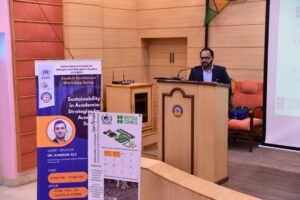
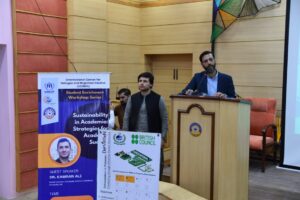
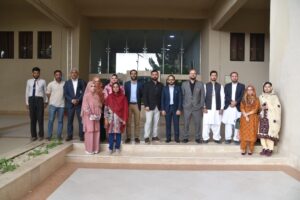
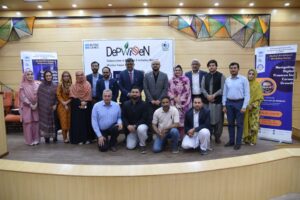




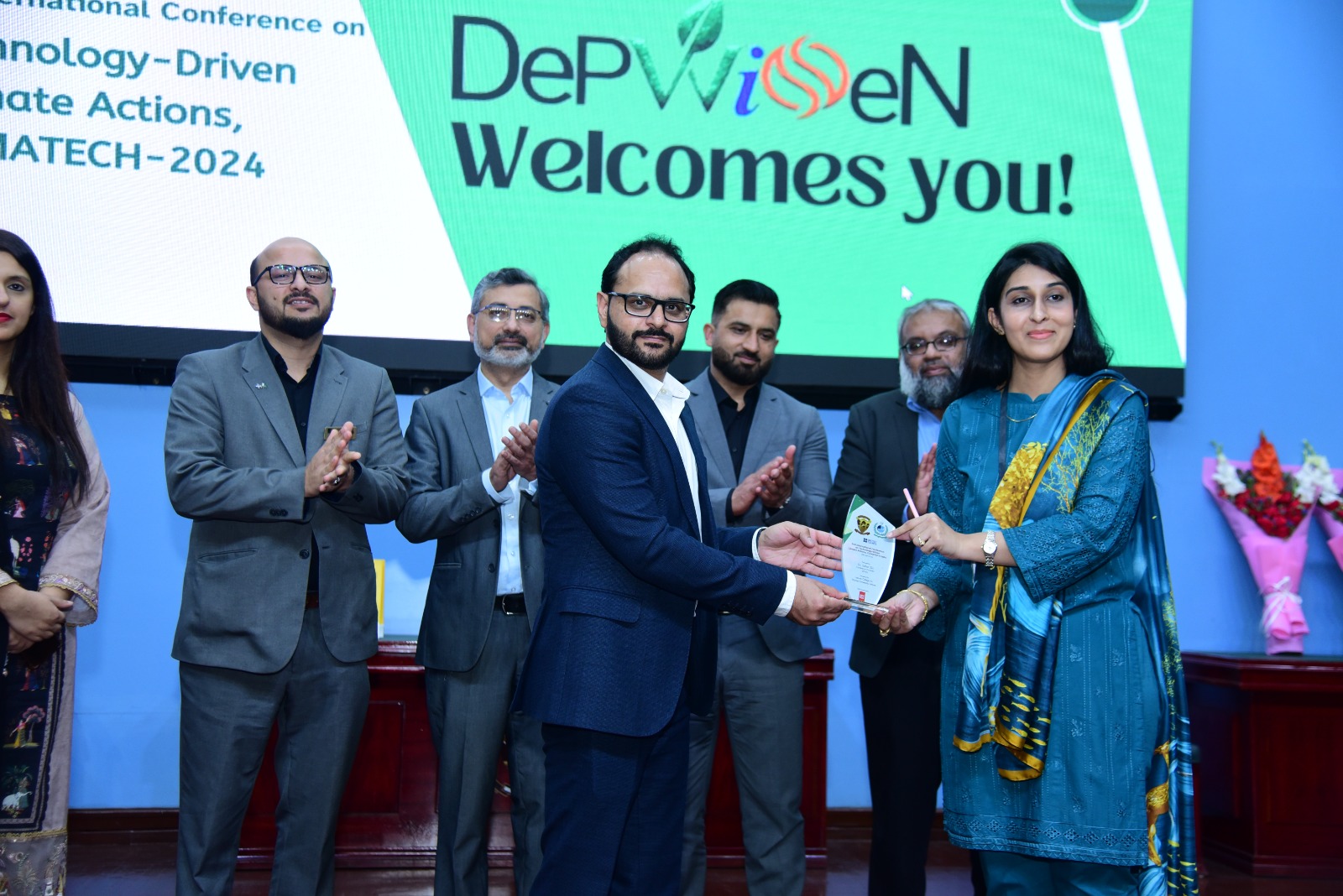
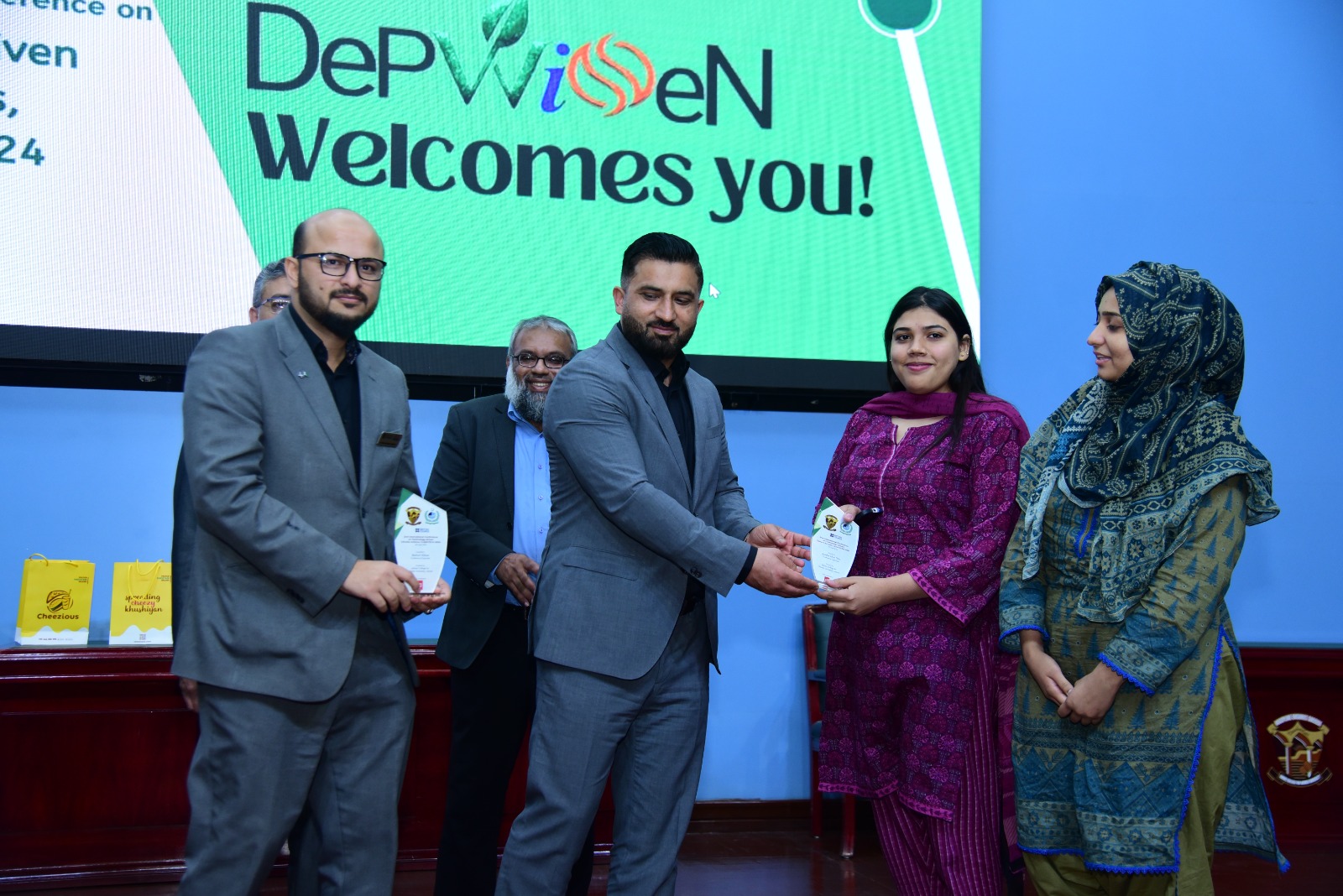















Consortium Partners
Institutional Partners & Collaborators